
Palm Reading: Unlocking the Secrets of Your Hand
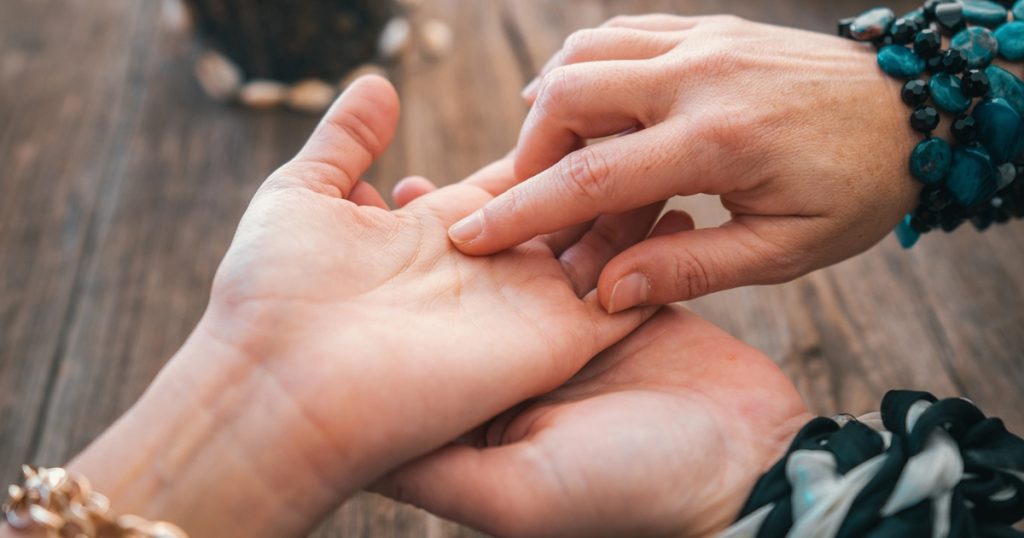
Astrology may lead us to gaze into the cosmos for answers about our lives, but a different ancient practice advises us to look closer to home – directly into the palms of our hands. Palmistry, also known as chiromancy or palm reading, is a time-honored practice that interprets the lines and formations on the hands to reveal personality traits, life events, and even the potential future. This art form is based on the premise that our hands hold a mirror to our souls and provide a tangible roadmap to understand our unique journey in life.
Delving Deeper into Palmistry’s Rich Past
The art of palmistry, or hand reading, has been entwined with human history for thousands of years. Its first seeds are believed to have been sown in ancient India, only to spread across diverse cultures and civilizations, including China, Greece, and Egypt. It was not merely a parlor game or a passing curiosity; rather, it was recognized as a profound tool of insight, consulted by mystics, scholars, and philosophers alike.
One of the luminaries who explored the realm of palmistry was none other than the famed Greek philosopher Aristotle. He documented his findings and theories on the subject, which were later passed onto his renowned student, Alexander the Great. It’s said that Alexander was so fascinated by this art that he often used it to judge the character of his military officers.
Throughout the centuries, the influence of palmistry spread far and wide, from the glittering palaces of royalty to bustling common marketplaces. Emperors, queens, scholars, and commoners – all would gaze into the lines etched in their palms, seeking to decipher the secrets of their destiny and character.
A Closer Look at Our Hands: Understanding the Major and Minor Lines
When we unclasp our hands and look at our palms, we find them covered in a unique pattern of lines, ridges, and formations. To the untrained eye, these may seem random or merely the product of human anatomy. However, to a palmist, each of these holds profound meaning and provides insights into the individual’s life journey.
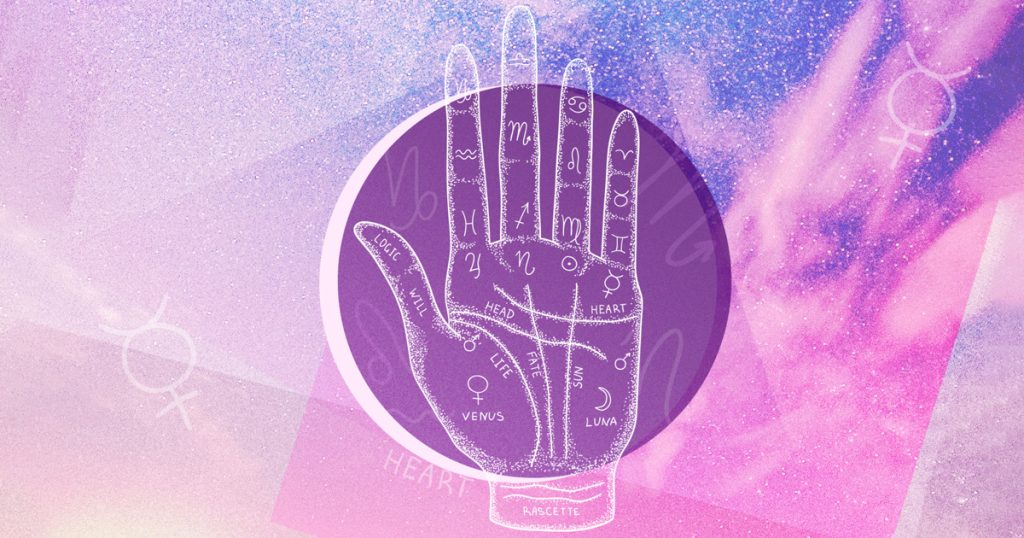
Among the numerous lines that etch the palms, palmists pay special attention to three major lines: the Life Line, Head Line, and Heart Line.
The Life Line: Despite a common misconception, the Life Line doesn’t forecast the length of one’s life. Instead, it encapsulates the vitality, life energy, and general path of the individual’s life. The Life Line originates between the thumb and index finger and makes its journey towards the base of the thumb, its path and quality holding various implications about life experiences.
The Head Line: Cutting across the palm horizontally, the Head Line is a window into the individual’s mind. It reflects intellectual tendencies, depth of thought, and decision-making strategies. The presence, absence, or clarity of this line provides a roadmap of the person’s intellectual life and mental fortitude.
The Heart Line: Embarking from beneath the little finger, and sweeping across the upper palm, the Heart Line represents the emotional realm of the person. It sheds light on how we navigate relationships, express love and emotions, and our tendencies towards romantic relationships.
These major lines form the foundation of a palm reading. However, a seasoned palmist does not stop here. Apart from these, numerous other minor lines and markings might adorn a person’s palm. These include the Fate Line (also known as Destiny Line), the Sun Line, the Marriage Line, and many more. Each of these lines, though smaller, reveals distinct aspects of an individual’s life, enriching the narrative told by the major lines.
The Mounds of Your Hands: Uncovering Planetary Energies
An exciting feature of our hands that comes under the purview of palmistry is the fleshy, hilly parts of our palms, referred to as mounds or mounts. Like the lines etched in our hands, these mounds aren’t there merely for show. Instead, each mound is thought to correspond to different planetary energies, much like how the zodiac signs have planetary rulers in astrology.
Each mound in your hand is an embodiment of a particular planet’s characteristics and is named after that celestial body. For instance, the Venus Mount, which you’ll find near the base of your thumb, signifies love, beauty, and sensuality — qualities that are traditionally associated with the goddess Venus. Similarly, the Jupiter Mount, located under your index finger, is related to ambition, leadership, and wisdom, reflective of the expansive and generous nature of planet Jupiter.
But that’s not all. There are mounts for each of the classical planets — Saturn, Sun, Mercury, Mars (which has two mounds: Mars Positive and Mars Negative), Moon — and also for less-celestial entities like Rahu and Ketu, the lunar nodes significant in Vedic Astrology. The prominence, absence, or distinct markings on these mounts all tell a tale about the individual’s strengths, weaknesses, and inclinations, giving the palmist more depth and detail in their reading.
While each mound in your hand embodies a particular planet’s characteristics, in astrology, these celestial bodies carry significant meanings too. They represent diverse components of life and radiate different types of energy. If you’re interested in understanding more about how these planets influence our lives from an astrological perspective, we suggest you read our article Horoscope 101: A Beginner’s Guide.
Hands at a Glance: Types and Shapes
Diving further into the ocean of palmistry, we come across another compelling element: the overall shape, size, and even color of our hands and fingers. It might surprise you to learn that much like the unique lines and mounts, these too contribute valuable insights during a palm reading.
Palmists classify hands into four primary types, each associated with the four elements of astrology: Earth, Air, Fire, and Water. The size of the palm, the length and shape of the fingers, the quality of the skin, and even the manner in which a person moves their hands — all feed into determining the elemental hand type.
An Earth hand, for example, is typically square or rectangular, with few lines. People with Earth hands are often practical, grounded, and reliable. In contrast, those with a Water hand, characterized by long, oval-shaped palms and a high number of fine lines, are usually emotional, sensitive, and imaginative.
By delving into the hand type, a palmist can add another layer to their understanding of the person’s inherent personality traits, potential, and predispositions, thus enriching the reading further.
Reading the Hands, Understanding the Self
Before we wrap up this introduction to palmistry, it’s crucial to remember that like astrology, palmistry should be seen as a guidance tool, not a rigid law carved in stone. It provides intriguing insights into your character, life cycles, and potential paths. Yet, your free will, choices, and actions remain the decisive factors in shaping your life’s journey.
As you start to explore the fascinating art of palmistry, you’ll realize that your hands, which you’ve known all your life, are more than just physical tools for action. They’re akin to personal storybooks waiting to be read, encoded with the secrets of your past, nuances of your present, and a range of possibilities for your future. With each line, mound, and shape, they whisper the unique tale of you, offering a richer understanding of who you are and the immense potential you hold within you.
What Does Your Future Hold?
We calculate your future using a complex evidence-based algorithm by incorporating individual palmistry, astrology, and numerology information. Our unique formula will interpret your future that you already hold within the palm of your hand.
What Does Your Future Hold?
We calculate your future using a complex evidence-based algorithm by incorporating individual palmistry, astrology, and numerology information. Our unique formula will interpret your future that you already hold within the palm of your hand.