
Reincarnation: The Journey of the Soul Through Time
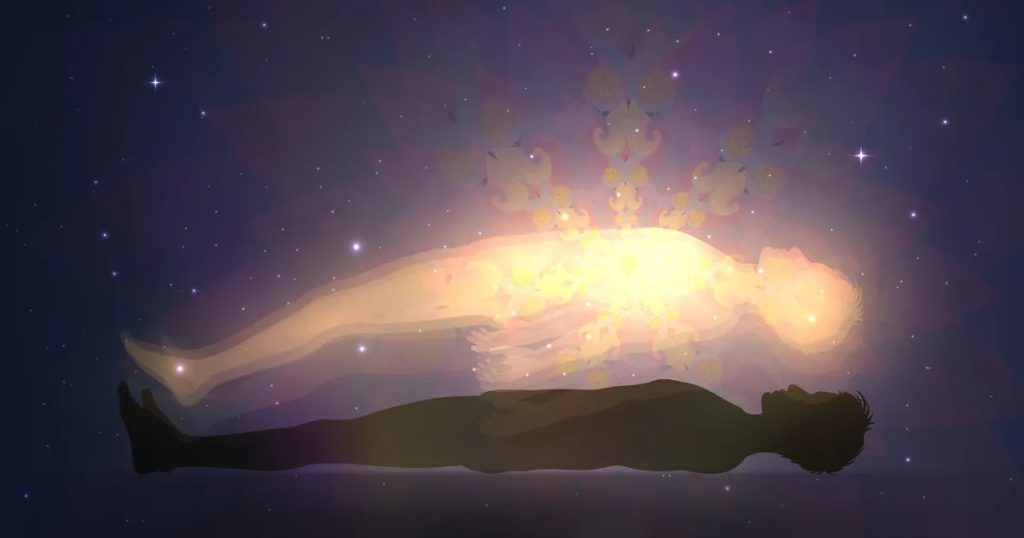
Reincarnation, an age-old belief positing the soul’s odyssey through numerous lifetimes, has held the human imagination in its thrall for countless centuries. This venerable concept proposes that the soul, being eternal, undergoes a series of physical incarnations in manifold forms, navigating the vast expanse of time and space to learn, evolve, and accomplish its spiritual destiny. In this comprehensive exposition, we set forth on an illuminating journey into the profound and enigmatic phenomenon of reincarnation, plumbing its historical origins, fundamental tenets, and the potentially life-altering implications it has for our comprehension of life, death, and the quintessence of the human experience.
The doctrine of reincarnation paints a picture of life as an unending cycle of birth, death, and rebirth, each stage an integral part of the soul’s ongoing journey. Rather than perceiving life as a singular, finite event, it promotes the belief that we exist as eternal spiritual beings temporarily inhabiting physical forms in a series of incarnations. Each lifetime presents a unique set of experiences and lessons designed to facilitate the soul’s growth and evolution, moving it closer towards its ultimate goal of spiritual enlightenment.
In the following discourse, we’ll dive deep into the roots of this fascinating concept, tracing it back to its origins in ancient civilizations where it found expression in various religions and indigenous traditions. We’ll delve into the core beliefs that underpin this philosophy, exploring the intricate dynamics of karma and the role it plays in shaping the soul’s journey.
The Reincarnation Philosophy: Its Roots and Foundational Beliefs
The concept of reincarnation has a long-standing historical origin that stretches back to numerous ancient civilizations across the globe. It is a spiritual belief that can be identified within the tenets of various religions and spiritual practices, ranging from Hinduism and Buddhism to a myriad of indigenous cultural traditions. The principle of reincarnation is fundamentally based on the perspective that life is not a linear trajectory, but rather, a cyclical process. From this viewpoint, the stages of birth and death are not ultimate beginnings or ends, but are instead seen as mere transitional phases in the perpetual journey of the soul.
As per the doctrine of reincarnation, it is believed that every soul undertakes a physical embodiment with the purpose of learning, maturing, and fulfilling its predetermined karmic path. The concept of Karma, a universal law that defines the principle of cause and effect, plays a pivotal role in regulating the journey of the soul. It molds the experiences of the soul and sets the circumstances of each successive life based on the soul’s actions and intentions from its past incarnations. Actions of goodwill generate positive karma, resulting in beneficial circumstances and leading to spiritual development, whereas actions driven by ill-will generate negative karma, consequently leading to hurdles and providing opportunities for the soul to evolve and attain redemption.
The Evolutionary Objective of Reincarnation
The philosophy of reincarnation presents a profound and enlightened understanding of the purpose of human existence. It advocates that life is not a static existence, but a continual process of development and evolution. This perspective provides innumerable opportunities for the soul to learn, reconcile, and enhance its level of consciousness. Every life presents its unique set of lessons, experiences, and relationships, all of which contribute significantly to the soul’s journey of self-discovery and spiritual illumination.
Through the ongoing cycle of birth, death, and rebirth, the soul amasses wisdom, settles its karmic imbalances, and endeavors to merge with its divine core. The myriad of challenges, joys, and sorrows encountered in each lifetime contribute to the soul’s attainment of a deeper understanding of itself and its integral connection with the entire universe. In this cyclical process, the soul discovers the threads that bind it to the rest of creation, bringing it closer to ultimate spiritual enlightenment. Furthermore, some believe that during these cycles of existence, souls form deep, transcendent connections with other souls, often referred to as soulmates. Learn more about this concept in our guide on Finding Your Soulmate: A Spiritual Guide.
Proofs and Correspondences
The belief in reincarnation, while deeply ingrained in a variety of spiritual and philosophical systems, has also been supported by the personal experiences and memories of many individuals, thus adding a layer of subjective validity to this ancient concept. Phenomena such as past life regression therapy, near-death experiences, and spontaneous recollections of previous incarnations are among those experiences that seemingly corroborate the concept of reincarnation. These instances suggest the existence of a soul’s journey that transcends the boundaries of a single lifetime and ventures into the realm of continuous spiritual evolution.
Additionally, compelling parallels can be drawn from the narratives of young children who spontaneously recall precise details about their alleged past lives. These accounts are often surprisingly detailed and accurate, providing potentially compelling evidence for the reincarnation hypothesis. The children in question tend to recall specific memories, names of people, geographical locations, and sometimes even languages that they could not have learned or been exposed to in their current life context. Such narratives lend credence to the idea of reincarnation and challenge our understanding of life, death, and the nature of human consciousness.
Implications of Reincarnation and Their Transformational Power
Accepting and embracing the belief in reincarnation can fundamentally transform our perception of life and our approach to living. It encourages us to appreciate the interconnectedness of all living entities, promoting a sense of empathy, compassion, and responsibility for our actions and their ripple effects on others and the world at large.
Furthermore, the concept of reincarnation provides comfort and hope in confronting mortality and the pain of loss. It posits that physical death is not an absolute end, but merely a transition point in the ongoing journey of the soul. This perspective suggests that the soul continues to evolve and grow beyond the physical realm, which can provide some relief from the fear of death. By presenting a broader framework to understand life’s trials, tribulations, and experiences, it offers a more profound context for discerning the purpose and meaning of life.
Moreover, the acceptance of reincarnation urges us to adopt a long-term vision of personal growth and spiritual development. It inspires introspection on our choices, actions, and intentions, prompting the understanding that their impact extends beyond the immediate present, potentially influencing future incarnations. This awareness motivates us to live our lives with greater intentionality and mindfulness, aligning our actions more closely with our deeply-held values and aspirations. By doing so, we actively contribute to our spiritual evolution, realizing that our lives are interconnected chapters in a grand narrative of the soul’s journey.
What Does Your Future Hold?
We calculate your future using a complex evidence-based algorithm by incorporating individual palmistry, astrology, and numerology information. Our unique formula will interpret your future that you already hold within the palm of your hand.
What Does Your Future Hold?
We calculate your future using a complex evidence-based algorithm by incorporating individual palmistry, astrology, and numerology information. Our unique formula will interpret your future that you already hold within the palm of your hand.